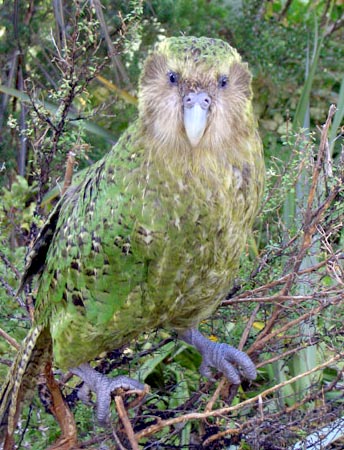
A large, nocturnal, ground-dwelling parrot found only in New Zealand, with mottled moss-green feathers and an owl-like face. It is the world's heaviest parrot and the only flightless one. Introduced cats, rats and stoats almost wiped it out; it now lives mostly on predator-free islands.
Quick answers
What is it?Bird
Carnivore?No, herbivore
Dangerous?No
Domesticated?No
Awake when?Night
A large, nocturnal, ground-dwelling parrot, sometimes called the owl-parrot.
Hibernates?No
Kept as a pet?No
Do people eat it?No
Māori once hunted it for its meat and feathers; today every known bird is named, tagged and kept on predator-free islands.
At a glance
Found inNew Zealand
HabitatForest, Scrub, Grassland
ColoursGreen, Yellow
SizeMedium
Length58–64 cm
WeightMales 1.5–3 kg; females 0.95–1.6 kg
Legs2
Covered inFeathers
Lives alone
Lives forUp to 100 years
Lays eggs
In the wild
- Where it lives
- New Zealand only: four small predator-free islands, plus a mainland sanctuary at Maungatautari since 2023.
- What it eats
- Plants only. It can tell foods apart by smell while foraging at night, which only one other parrot is known to do.
- Conservation
- Critically Endangered (IUCN Red List)
Did you know
The world's only flightless parrot, with just 325 known birds alive in 2026.
It may be one of the longest-lived birds, with a reported lifespan of up to 100 years.
It is the only parrot with a lek: males gather and display from bowls they dig in the ground, and females choose between them.
Often confused with
- Kea
Both are New Zealand parrots, but the kākāpō is a heavy, flightless bird of the ground at night, while the kea flies and lives in South Island forests and mountains.
Compare side by side
On these lists
Sources
Last reviewed
Play
Could you have guessed it?
A photo, a few hints, one guess. Same 438 animals.
