Kakapo vs Kea: What's the Difference?
Both are New Zealand parrots, but the kākāpō is a heavy, flightless bird of the ground at night, while the kea flies and lives in South Island forests and mountains. The kakapo is a herbivore; the kea is an omnivore.

Common questions
Can a kakapo fly?
No. The kākāpō is the only flightless parrot. It lives on the ground and is active at night.
Is a kea a kakapo?
No. Both are New Zealand parrots, but they are different species (Nestor notabilis and Strigops habroptilus). The kea flies and is active by day in the South Island's forests and mountains.
Which is heavier, a kakapo or a kea?
The kākāpō, the world's heaviest parrot: males weigh 1.5–3 kg and females 0.95–1.6 kg, while a kea weighs 750–1,000 g.
Quick answers
They differ on 2 of the 8 quick answers: carnivore, awake when.
| Question | Kakapo | Kea |
|---|---|---|
| What is it? | Bird | Bird |
| Carnivore? differs | No, herbivore | Omnivore |
| Dangerous? | No | No |
| Domesticated? | No | No |
| Awake when? differs | Night | Daytime |
| Hibernates? | No | No |
| Kept as a pet? | No | No |
| Do people eat it? | No | No |
At a glance
| Question | Kakapo | Kea |
|---|---|---|
| Found in | New Zealand | New Zealand |
| Habitat differs | Forest, Scrub, Grassland | Mountains, Forest |
| Size | Medium | Medium |
| Length differs | 58–64 cm | 46–50 cm |
| Weight differs | Males 1.5–3 kg; females 0.95–1.6 kg | 750–1,000 g |
| Legs | 2 | 2 |
| Covered in | Feathers | Feathers |
| Lives differs | Alone | In flocks |
| Lives for differs | Up to 100 years | 15–20 years |
| Can fly differs | No | Yes |
| Swims | No | No |
| Lays eggs | Yes | Yes |
About each
Kakapo
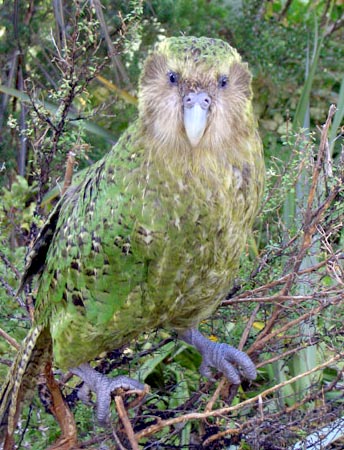
A large, nocturnal, ground-dwelling parrot found only in New Zealand, with mottled moss-green feathers and an owl-like face. It is the world's heaviest parrot and the only flightless one. Introduced cats, rats and stoats almost wiped it out; it now lives mostly on predator-free islands.
Kea
A large olive-green parrot of the forests and mountains of New Zealand's South Island, with bright orange under its wings. It is one of the few parrots that regularly spend time above the tree line, and it is famously curious and clever, solving puzzles and working in teams.
Sources
Last reviewed . The answers and notes come from each animal's own page, where every source is listed.
How each answer is decided: How we answer. More look-alikes: Commonly confused animals.